Showing posts with label paper crafts. Show all posts

Wednesday, 21 January 2015

Elephant No. 110: Matisse Cut-Out Elephant


Although I've never been a huge fan of Henri Matisse's paintings, I do really like his Cut-Outs, so today I thought I'd try making a Matisse Cut-Out elephant.

Born in 1869, Matisse is perhaps best known as a painter. Despite the fact that he is now recognized as towering figure in the development of Modern art, however, critics sneered at his initial experiments with bold and unusual colours.


Woman with a Hat, 1905
Henri Matisse (1869–1954)
Collection of the San Francisco Museum of Modern Art
Source: Wikipedia


In 1905, Matisse and a few like-minded painters exhibited their work at the Salon d'Automne in Paris. Their work created a sensation—and not in a good way. As I wrote in my original Elephant a Day blog, critic Louis Vauxcelles described their work as "Donatello au milieu des fauves!" ("Donatello amongst the wild beasts!"). This was because their work shared a room with a famous Renaissance sculpture by Donatello. Critic Camille Mauclair had a similar reaction, exclaiming, "A pot of paint has been flung in the face of the public!" Fauvism was born, and painting would never be the same again.


The Horse, the Rider, and the Clown, 1943–1944
Henri Matisse (1869–1954)
© Centre Pompidou, Paris
Source: artfund.org


Over the next few decades, Matisse continued to experiment with colours and forms, and by the late 1940s had all but abandoned painting on canvas for painted paper and a pair of scissors.


Icarus, 1946
Henri Matisse (1869–1954)
© Centre Pompidou, Paris
Source: Tate.org.uk

Although they started out relatively small, over time Matisse's Cut-Outs grew to encompass entire rooms. For those of you who are interested, MOMA (Museum of Modern Art) in New York City is currently featuring the exhibition Henri Matisse: The Cut-Outs, on view until February 10, 2015.


The Parakeet and the Mermaid, 1952
Henri Matisse (1869–1954)
Collection of the Stedelijk Museum, Amsterdam
Source: plainspeakingart
Stedelijk Museum, Amsterdam.


For today's elephant, I began by painting sections of some scrap sheets of artist-quality bristol board. I didn't want to use anything lighter, out of fear that it would ripple or buckle, and I didn't want to use anything heavier for fear of it getting ugly-thick and difficult to glue.

I chose colours I'd seen in various Matisse Cut-Outs, making sure I had a relatively large swath of that iconic Matisse blue. I also painted a section of white, thinking that using white uncoated bristol board might be cheating. Because I was planning to glue my elephant to a relatively small canvas board (5 x 7 inches), I didn't need an entire sheet of each colour. 


I began by cutting out a large yellow shape to fill in a good chunk of the background. I used copious amounts of rubber cement, then covered the piece with a sheet of waxed paper and rolled it flat with a brayer (printmaking roller). I decided to leave removal of the excess glue until the end.

Matisse often used various framing elements, so I cut and glued on bars of pink and white.


I cut out the abstract elephant shape next. Matisse never made things that looked entirely figural, and he appears to have enjoyed adding pointy bits to curves, so I tried to follow suit.

I glued down the elephant and added a bar of green.


Here's where things got tricky. It's not as easy as I thought to fiddle with shapes and colour. Sometimes I liked a shape, but hated the various colours next to one another. Other times I like the interplay of colour, but didn't like the shapes.

Eventually I had a composition I could live with, so I glued all the last bits down and weighted it for a half-hour or so to make sure everything stuck. Then I cleaned off the excess glue.

And here it is. It was harder than I expected, but was actually rather fun to make. Playing with the various elements before gluing was a bit like playing with the flannelgraphs some of us had as kids. It isn't anything like an actual Matisse, of course, and I may yet change it, but for now cheap and cheerful works for me!


Elephant Lore of the Day
Rangers: 1 — Poachers: 0.

In October 2014, a large bull elephant was shot by a poachers' poisoned arrow in Kenya's Tsavo National Park. The aim, of course, was to kill the animal so that its tusks could be removed and sold on the lucrative black market. This elephant's tusks would fetch an estimated $400,000.


A bull elephant hit by a poisoned arrow falls to its knees.
Photo: DSWT/Barcroft Media
Source: Daily Mail


Aerial surveillance crews from the David Sheldrick Wildlife Trust saw the elephant fall to its knees and begin writhing in agony. One of their mobile vet teams moved in quickly, extracting the arrow and administering a dose of long-acting antibiotics to ensure that the elephant made a full recovery.

Although this elephant was lucky, many are not. Demand for ivory, particularly in China, is so high that poachers are killing elephants at the rate of 35,000 a year—or one every 15 minutes. With African elephant herds currently numbering a mere 500,000, it's clear that they may not be around much longer, if killing continues at this rate.


A mobile vet team arrives to save the elephant in the nick of time.
Photo: DSWT/Barcroft Media
Source: Daily Mail


To make matters worse, poachers have taken to poisoning waterholes with cyanide, using poison-tipped arrows, and shooting elephants from helicopters and jeeps. They are not above killing rangers as well. Nor are adult elephants their only targets anymore.


Medics work quickly to remove the arrow and administer life-saving drugs.
Photo: DSWT/Barcroft Media
Source: Daily Mail


Poachers used to concentrate on killing older African elephants with large tusks—first the males, because their tusks are larger, then the females. This has orphaned immense numbers of young elephants, which is disastrous for such social creatures. Now, however, as populations of large adult elephants are being extinguished, poachers are turning to young elephants.

There is some good news, however. Over the past several years, the David Sheldrick Wildlife Trust alone has made more than 2,000 arrests, and has located and removed more than 130,000 elephant snares. Because they use aerial surveillance, and run mobile vet teams in partnership with the Kenya Wildlife Service, they can locate and react quickly to elephants in distress.


The elephant eventually gets to its feet and makes its way back into the bush.
Photo: DSWT/Barcroft Media
Source: Daily Mail


To Support Elephant Welfare

Tuesday, 21 January 2014

Elephant No. 88: Get Well Card


One of my friends recently had surgery, so I decided to make her a get well card. I am ashamed to say that my first thought was to buy a card, then I remembered that I can sort of draw, and that perhaps a handmade card might be nicer.

I knew the kind of thing I wanted to draw—an elephant in a bed with a thermometer in its mouth—but that was about it. And, as anyone who works in the visual arts will tell you, knowing what you want something to look like doesn't mean it's going to actually end up looking like that at all.

I started by cutting a piece of 9 x 12-inch (22.9 x 30.5 cm) watercolour paper in half, then folded it in half again, giving me a drawing surface of 4.5 x 6 inches (11.5 x 15.25 cm).

I sketched something out. The angles of the bed are wonky and the perspective is off, but I thought it would be okay. I know she likes birds, so I also put a couple of birds in the window.


Because I wanted to use watercolour pencils for this, I used a pigment liner to outline things, allowing me to erase the pencil lines below. When I was finished, I heat-set the pen lines with a hairdryer.


I coloured everything with watercolour pencils, adding some texture to the walls and floor at the same time.


Finally, I painted over everything with water. Kind of cute, in the end. Here's hoping it helps her feel better soon!


Elephant Lore of the Day
Producing an elephant get well card made me wonder how people can tell when an elephant is sick. Dogs and cats get hot, dry noses; birds might start moulting. But an elephant is already kind of dry all over, and it doesn't have feathers to drop.

Asian mahouts often have entire manuals devoted to elephant care. Some manuals wax almost mystical about an elephant's form and feelings; others are rather no-nonsense, with an anything-but-mystical approach to elephant welfare.

In the no-nonsense category, I found a guide for elephant care written especially for mahouts, which includes the following symptoms for a sick elephant:
  • The elephant is listless, hardly moving its ears, trunk and tail.
  • The elephant seems exhausted, often resting its trunk on the ground for extended periods.
  • The elephant stands with its eyes closed and yawns frequently.
  • The elephant is agitated and sometimes bellows near the ground.
  • The elephant is agitated and tries to apply dirt to a wound.
  • The elephant's eyes are dull, sunken and appear to shed copious tears.
  • There is a mucous-like discharge from the elephant's trunk.
  • The elephant's skin is stiff to the touch and exceptionally dry.
  • The inside of the elephant's mouth and trunk, as well as its tongue, are either very pale, brownish, or bright red, rather than the usual pink.
  • The skin above the toenails is dry.  
So, what do you do if your elephant is sick? Oddly enough, many of the remedies for elephants are the same as those for humans.

If an elephant is in pain, you give it 40 to 60 aspirin, ibuprofen or paracetamol, either dissolved in water or ground up in a favourite food such as bananas.

If an elephant has a wound, you apply iodine, alcohol, hydrogen peroxide and antibiotic creams.

And if an elephant has muscular pain, anti-inflammatory ointments are rubbed into the skin. And rubbed into the skin. And rubbed into the skin again, because elephant skin absorbs ointments very quickly, requiring multiple applications.


A jabstick being used on an elephant's hind leg to give it
a much-needed injection of antibiotics.
Source: http://www.elephantcare.org/medtech.htm


Elephants are also prone to many injuries and illnesses never seen in humans, as well as sad conditions such as malnutrition, overwork and injuries due to harsh treatment—to say nothing of even worse man-made traumas such as landmine injuries, gunshot wounds and poison-by-poacher. Nor are elephants immune to snakebite, insect bites, and even illness from that industrial wastes that are often less regulated in the developing world.

As for the thermometer that I put in my little elephant's mouth? Although some mahouts can tell if an elephant has a fever just by the temperature of its breath, a thermometer is normally used to take an elephant's temperature. Just not in its mouth or ear.


Asian bull elephant.
Source: http://www.whalenation.org/asianelephantsproject.html

To Support Elephant Welfare

Saturday, 16 November 2013

Elephant No. 75: From the Archives—Thaumatrope


First posted this on January 11, 2012, in the original Elephant a Day blog.


I've always been enchanted by optical toys and illusions, so today I thought I'd try to make a thaumatrope. 

Thaumatropes—a name derived from the Greek words thauma ("wonder") and tropos ("turn")—were popular toys in Victorian times. Each thaumatrope consists of a cardboard disc with pictures on both sides, threaded onto a pair of strings. When the strings are twirled, the two pictures appear to combine into a single image. This is due to a principle once known as persistence of vision, by which the retina was thought to retain images long enough for them to blend together. This has since been explained as a phenomenon rooted in the brain's perception of motion.

The thaumatrope is most commonly credited to John Ayrton Paris, who in 1824 used a thaumatrope to demonstrate "persistence of vision" to the Royal College of Physicians in London, England. His invention was based on the ideas of astronomer John Herschel and geologist William Henry Fitton, the latter of whom is also sometimes said to have invented the thaumatrope. Others give credit to Charles Babbage, inventor of the world's first mechanical computer.

The range of images on thaumatropes is vast, the most famous of which is a bird in a cage. Sayings, poems or riddles are also sometimes inscribe along the outside of the disc. There is an excellent collection of thaumatropes, many of which can be viewed in action, on the delightful and informative Richard Balzer Collection website.

For today's elephant, I decided to draw a "naked" elephant on one side, with a hat and clown suit on the other side. Hopefully, when the thaumatrope is spun, the two will blend. The faster the disc spins, the stronger the illusion of a single image.

Making a thaumatrope is quite simple. To start, you need two cards or discs of identical size and shape. I opted to cut a couple of discs measuring about 7.5 cm (3 inches) in diameter, since this is the traditional thaumatrope shape. I used a lightweight bristol board, but any light cardboard will do. Index cards are also recommended on some sites offering instructions on making thaumatropes.

Once you have the discs cut, you can either punch the holes in the sides right away, or start your first drawing. I didn't want to punch the holes quite yet, so I sketched an elephant in the middle of one disc with pencil. I lightly sketched the hat and clown outfit as well, so that I would have some idea of how it would look when I did the reverse side. Once I was happy with the elephant, I went over it with a permanent black marker and erased the pencil lines. I also put small black dots where I intended to punch holes.


To create the second drawing, you need to be able to see the first drawing. The easiest way to do this is either hold it up to a window and trace, or use a light table. I used a window, because I don't actually have a light table. Shocking, I know. In addition to drawing the hat and clown outfit, carefully leaving out any parts of the elephant, I added a few confetti dots in the background, and repeated the small punch-out dots.


Then I decided both sides needed a bit of colour, so I painted them with watercolour.


The thaumatrope was now ready to be assembled. The most important thing to remember here is that the discs must be upside-down to one another. I don't know why this is—and it's beyond me to either understand or explain it—but I do know that, if you don't make them opposite to one another, the thaumatrope will look really weird. In this case, the hat would float around in the space below the elephant's body as soon as I set it spinning.


To finish the thaumatrope, you need to make holes in the two discs, and attach loops of string, or elastic bands, on either side. I pierced the holes with a large needle, and used red embroidery floss for the string.

Double over the string and feed it through both discs. 


Feed the cut ends through the loop and tighten. 


Tie knots in the cut ends. This not only finishes it off nicely, but gives you a place to loop your fingers when spinning the thaumatrope. 


Now comes the magic part. To spin the thaumatrope, I twirled it between my fingers until the string was tightly twisted. As soon as I pulled the two pieces of string out to the sides, the thaumatrope began to spin, and the pictures blended together. This was hard to photograph with just me to both spin and record, but you get the idea. Interestingly, there are no single shots in the original clip in which both sides of the disc are visible, so your eyes and brain really are responsible for this entire illusion. 


This was technically quite easy, and only took extra time because I wanted to carefully draw and paint it to give it an old-fashioned feel.

I like the final result a lot, and may even make a few for friends someday.


Elephant Lore of the Day
Elephants have the largest brains of all mammals, and are highly intelligent. In addition to being able to work out problems, they often alter their behaviour in response to new challenges.

They are also excellent escape artists. In the 1970s, at Marine World Africa in the United States, an Asian elephant named Bandula figured out how to either break open or unlock several devices used to secure the shackles on her feet. The most complex of the devices was a brommel hook, which closes when its two sides slide together. Bandula fiddled with it constantly, finally learning how to slide the hook apart by aligning the sides. 

Once Bandula freed herself, she helped the other elephants to escape along with her. There was a certain element of cunning involved as well: before escaping, Bandula and her companions looked around to be sure that no one was watching before they ran away. 

Similarly, a female elephant described in Eugene Linden's book, The Octopus and the Orangutan: More Tales of Animal Intrigue, Intelligence and Ingenuity, worked out how to unscrew iron eye bolts measuring 2.5 cm (1 inch) in diameter. Using her trunk to create leverage, she managed to completely untwist the bolt and free herself. 


To Support Elephant Welfare


Friday, 15 November 2013

Elephant No. 74: Bunting


Bunting is pretty popular right now, and when I saw some bunting-style banner kits in the dollar store a week ago, it occurred to me that it might be fun to try making some elephant bunting.

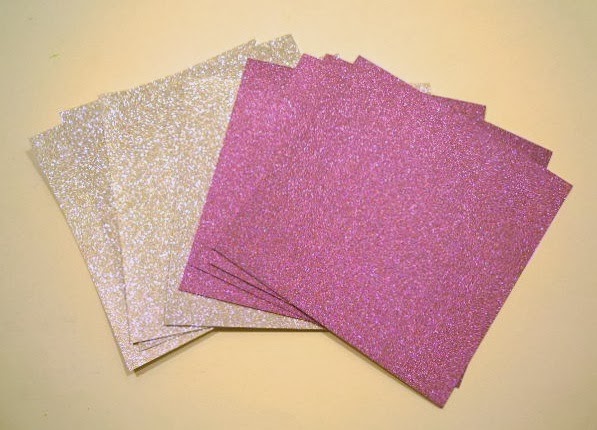
I decided not to buy the kits, because they were oddly expensive and nothing special. Instead, I bought two packages of sparkly 6 x 6-inch (15.25 x 15.25 cm) paper in white and mauve.


Because bunting usually has uniform pennant-shaped pieces, I made myself a template out of sturdy cardboard. I also punched guide holes in the spots I would need for stringing the pennants.


I cut out eight pennants, then tried to figure out how to "elephantize" them. My original idea was to punch elephant-shaped holes in them with a Martha Stewart punch a close friend had given me. Then I thought it might be nicer if I cut out elephants from the paper scraps and glued them to the pennants.


I decided to draw my own elephant shape, and created this template.


I cut out four elephants in each colour, making sure that half of them faced left, and half of them faced right.


Thinking that an elephant alone might look a bit plain, I cut out four stars in each colour with a star punch that I happened to have.


And, since I already had sparkly holes from making the pennants, I thought I might as well use those, too.


Using a heavy-bodied white glue, I glued everything down in a pattern I found pleasing, then placed all eight pennants under a heavy box to make sure everything had properly adhered.


I was originally going to use a white cotton ribbon to string everything together, but the piece I had was too short. Luckily, I had some purple satin ribbon that was perfect, so that's what I used.


Although this was a bit fiddly, it was relatively easy, once I decided on a design. And at three dollars for paper and maybe a dollar's worth of ribbon, it's an inexpensive way to create a rather nice party decoration.


Elephant Lore of the Day
Although the elephants don't get bunting for this particular party, they do get treats each March 13 for Thailand's  National Elephant Day. One of the largest celebrations occurs at the Maesa camp in Chiang Mai province, where more than 100 elephants gather for an elaborate feast of fresh fruit. The yearly all-you-can-eat buffet features tables piled high with bananas, watermelons, sugarcane, pineapples and more.


National Elephant Day banquet at Maesa Camp, Chiang Mai, Thailand, 2012.
Photo: © AP
Source: http://www.dailymail.co.uk/news/article-2114437/Herd-elephants-pack-
trunks-fruit-leaves-National-Elephant-Day-celebration-Thailand.html


The elephants live with their mahouts at Maesa, which is home to one of the largest herds of elephants in northern Thailand. Maesa is actively involved in both conserving and breeding the animals, in an attempt to halt their precipitous decline. A sobering statistic: at the beginning of the twentieth century, there were around 100,000 elephants in Thailand; today there are a mere 3,000 or so left in the entire country, only half of which are wild.

Although Maesa's elephants go through about six tonnes of grass and sugarcane a day, the yearly elephant feast is a way of acknowledging the elephant's importance to Thailand's history and national consciousness.


Elephants chowing down at Maesa camp on National Elephant Day, 2012.
Photo: © EPA
Source: http://www.dailymail.co.uk/news/article-2114437/Herd-elephants-pack-
trunks-fruit-leaves-National-Elephant-Day-celebration-Thailand.html

To Support Elephant Welfare


Monday, 11 November 2013

Elephant No. 70: From the Archives—Poppy Collage


Today is Remembrance Day here in Canada, so I thought I'd make a collage using poppy images for today's elephant. An elephant never forgets, and neither should we.

Remembrance Day is observed in Canada, and in countries throughout the Commonwealth, every November 11. In some countries it is called Armistice Day or Poppy Day, and is marked by the wearing of lapel poppies as a mark of respect and remembrance. In the United States, although the poppy is not worn, November 11 is observed as Veteran's Day.


Canadian Remembrance Day poppy.
Source: http://www.medicinehatmedia.com/2010/11/
remembrance-day-lest-we-forget/poppy/


British Remembrance Day poppy.
Source: http://mybritishlog.blogspot.com/2010/11/
poppy-day-remembrance-day-and-london.html


The First World War ended at the eleventh hour on the eleventh day of the eleventh month, and each year 11:00 a.m. is marked with two minutes of silence. Interestingly, at the Canadian War Museum in Ottawa, a small window aligned with the Sun's movements casts a beam of light on the headstone of Canada's Unknown Soldier at precisely 11:00 a.m. each November 11.

The poppy as a symbol of Remembrance Day derives from the poem In Flanders Fields, written in 1915 by Lieutenant-Colonel John McCrae. McCrae was a Canadian surgeon during the First World War, and wrote the poem on a battlefield following the death of a close friend. The poem is something Canadian children often learn in school, and many of us can probably recite the first few lines from memory.

In Flanders Fields

In Flanders fields the poppies grow
Between the crosses, row on row,
That mark our place; and in the sky
The larks, still bravely singing, fly
Scarce heard amid the guns below.

We are the Dead. Short days ago
We lived, felt dawn, saw sunset glow,
Loved and were loved, and now we lie,
In Flanders fields.

Take up our quarrel with the foe:
To you from failing hands we throw
The torch; be yours to hold it high.
If ye break faith with us who die
We shall not sleep, though poppies grow
In Flanders fields.

Sadly, Lieutenant-Colonel John McCrae died in early 1918 of pneumonia. He was buried with full military honours in the Commonwealth Cemetery at Wimereux, near Boulogne, France. 

Lieutenant-Colonel John McCrae.
Source: http://en.wikipedia.org/wiki/File:
Lieut.-Col._John_McCrae,_M.D..jpg


Today's elephant is a simple collage—a process that involves nothing more than cutting out images and pasting them to a sheet of paper. I wasn't sure a red elephant made only of poppies would work without looking a mite too cartoonish, but it was something I really wanted to try.

Because it's Remembrance Day and I wanted to use poppies, I downloaded poppy images from a wide range of sources. Because I'm going to alter them beyond recognition, I haven't included the sources here.


I thought about sketching something, but decided instead to just let the collage evolve. I started, as I often do, with the elephant's topline.


Once I can more or less see the outline of the elephant in my mind, it becomes easy enough to start filling things in.


This actually took nearly two hours. It's surprisingly difficult to find whole poppies in the right sizes and shapes, and I didn't want to reprint or resize anything. In the trunk area in particular, there is quite a lot of layering.


Today's elephant is dedicated to all of my friends and family, past and present, who have been willing to lay down their lives for the rest of us—in places I would never want to go, and under circumstances I would never want to face. "Thanks" will never be a big enough word.


Elephant Lore of the Day

The use of war elephants originates in India sometime between 1000 and 500 B.C. Heavily armoured elephants were a key part of most large battles, often leading the charge against the enemy. Towards the end of this period, as civilizations advanced, Indian kingdoms developed a four-part military system: infantry, elephants, chariots and archers.

When Alexander the Great began his invasion of India in 326 B.C., it was the first time a western military had encountered elephants on the field of battle. After crossing the Indus River, Alexander and his troops were faced with a massive army led by Porus, ruler of the Punjab. Although the Indian army were master charioteers and archers, the most frightening aspect of the military force facing the Greeks was the war elephants. 

Outmanoeuvred by Alexander, and with his chariots stuck in the mud, Porus sent his infantry and elephants against the Greek forces. Although the Greek army was a disciplined and well-armoured force, the elephants with their bronze facial armour terrified the Greeks and their horses.  

However, although the elephants killed many of the Greeks, the Indian infantry was no match for Alexander's soldiers. The Indians took shelter near the elephants; unfortunately, the elephants were distressed by the many wounds they had suffered, and became enraged, trampling the men sheltering around them. The Greek cavalry circled around behind the Indian army and won the battle. 

Although Alexander's forces had won this battle, they refused to march farther east, afraid that even bigger Indian armies might await them, likely with thousands of war elephants. The Greeks turned around and headed back home. 

For centuries, Indian armies used war elephants, and the four military divisions: chariots, infantry, archers and elephants remained. Because of their thick skin, elephants needed less armour than horses and men, and were a terrifying sight on any field of battle. Along with being the first people in the world to use war elephants, Indians were also the last, using them right into the nineteenth century.


Battle at Lanka from the Ramayana by Sahib Din, ca. 1649–1653
Collection of the British Library, London
Source: http://en.wikipedia.org/wiki/File:Battle_at_Lanka,_
Ramayana,_Udaipur,_1649-53.jpg


To Support Elephant Welfare