Showing posts with label home decor. Show all posts

Sunday, 11 January 2015

Elephant No. 100: Porcelain Clock


Several years ago, Terrence bought me this beautiful clock in a local antique shop. The sellers didn't know much about it, although they thought, from the style, that it might be from the 1920s. I think it may be somewhat earlier, but I'm no expert.


I haven't been able to find out anything else about it over the years. The only markings say "Germany" and "5002". It's about 10 x 10 x 3.5 inches (25 x 25 x 9 cm), and has no coloured glazing on the back at all, since it's meant to sit against a wall or mantle. Otherwise, it's in great condition with no cracks, chips or lost glazing—other than a small amount of gold that's been rubbed off the elephant's tassel.


The clock mechanism is meant to be wound once a day, and it can be set to chime or not. It's never worked since I've owned it, and defies my puny attempts to make it sit straight. If it bothered me that it doesn't work, I'd have someone fix it, but it's never really bothered me.


This is one of my very favourite elephant-themed possessions, and sits on a bookshelf with my collection of books on India and Asia. I love it as it is, without knowing a thing about it—but if anyone out there recognizes either this clock or its style, I'd love to hear from you.


Elephant Lore of the Day
One of the most stunning elephant-themed clocks ever created was a water clock dreamed up by Ibn al-Razzaz al-Jazari in the 13th century A.D.


Elephant clock from al-Jazari's The Book of the
Knowledge of Ingenious Mechanical
Devices
(1206).
Source: Wikipedia


The massive clock featured an Asian elephant with the clock workings contained inside the howdah on the elephant's back. The mechanism was relatively simple: a water bucket inside the howdah contained a floating bowl with a small hole. It took half an hour for water to filter into the bowl, which caused the bowl to sink. As it sank, it pulled a string attached to a "seesaw" in the top of the howdah.

The seesaw released a ball that dropped into the mouth of a snake. The snake then tipped forward, pulling the water bowl out of the main bucket. At the same time, a system of strings would cause a figure perched high in the howdah to raise its left hand to indicate a half-hour, and its right hand to indicate a full hour, The mahout at the front would also strike a cymbal and a bird would chirp. The snake then tipped back and the whole cycle would repeat.


Reproduction of al-Jazari's elephant clock,
Kasimiye Medrese, Mardin, Turkey.
Photo: Nesim Ardoga
Source: Wikipedia

Over the years, several modern reproductions of the clock have been produced. One of these, created by 1001 Inventions, was displayed in 2010 at the Science Museum in London, England, to great acclaim. The most famous reproduction, however, is a full-sized working version that serves as the centrepiece of the Ibn Battuta Mall in Dubai.


Working reproduction of al-Jazari's elephant clock,
Ibn Battuta Mall, Dubai.
Photo: Jonathan Bowen, 2007
Source: Wikipedia


To Support Elephant Welfare

Friday, 2 January 2015

Elephant No. 91: Small Vintage Elephant


I found this little guy in a junk shop a couple of months ago, and decided I had to have it. It only cost two dollars, so it wasn't a major expense. Terrence thinks it's kind of homely, but I rather like the sway-backed weirdness of it.


From an online search, I discovered exactly . . . nothing about it. There are no markings on it at all, and no corresponding photographs anywhere online that I could find.


From the design, I'd guess it's from the 1940s, and from the glazing and painting style, I'm thinking Occupied Japan. It's in very good shape, with no chips or cracks anywhere.


I'm pretty sure it's a toothpick holder—at least, that's what I'll be using it for—but no matter what it's supposed to be, I really like it, and I'm glad to have rescued it from its dusty shelf.


Elephant Lore of the Day
Oddly enough, there's a plant called Elephant's Toothpick. Orginally discovered in Angola, Sansevieria cylindrica is native to southern Africa, and grows to a height of about 150 cm (60 inches), and a diameter of about 50 cm (20 inches).


Elephant's Toothpick
Photo: Ola Brisa Gardens
Source: http://olabrisagardens.com/succulents-and-cactus/african-spear/


Also known as African Spear, Snake Plant, or Mother-in-Law's Tongue, Elephant's Toothpick is a hardy succulent that thrives on neglect. It produces a small, round fruit, and delicate white flowers that open only at night.


Flowers of the Elephant's Toothpick plant.
Photo: Ola Brisa Gardens
Source: http://olabrisagardens.com/succulents-and-cactus/african-spear/

I couldn't find any information on whether Elephant's Toothpick is eaten or otherwise used by elephants. Although elephants do eat cactus, given the toxicity of Elephant's Toothpick to humans, it may not be a preferred food among elephants, either.


Elephant preparing to eat cactus.
Photo: Kat's Tails
Source: http://thekatstails.blogspot.ca/2011/01/addo-afrique.html


To Support Elephant Welfare

Thursday, 16 January 2014

Elephant No. 85: Tea Cozy


This year's challenge in my fibre arts guild was tea cozies. Although I'm a tea drinker, I usually make it by the cup, so tea cozies are not really my thing. You have to admit, however, that a teapot does bear a certain resemblance to an elephant, so this particular challenge seemed tailor-made for me.

I was going to use a pattern for this, but the only elephant tea-cozy pattern I found wasn't quite what I wanted. So I decided to wing it. I'm not the kind of person who whips off fantastically clever knitted things without a pattern, but I figured I could probably manage some kind of rounded shape, a trunk, some ears and a tail.

I planned to "full" or felt the elephant components in my washing machine, so I needed yarn that was 100% wool and/or other animal fibre. I had some yarn from a stash exchange that looked like it might work. Unfortunately, it had no label, so I burned a bit to test it. According to a study I found online, if a fibre "flames up then snuffs itself out quickly, leaving a small, easily crushed bead of carbon," it's wool. Okey dokey, then.


I wanted a smallish elephant, so I chose the second-smallest teapot we have.


These were the pieces I knitted. I used large (7.5 mm) needles to make everything spacey enough to allow for shrinkage. I added a green party hat to the mix, as I wanted to end up with a party elephant.


I tossed everything into my top-loading washing machine, and ran it through a long cycle with hot water, a bit of laundry soap, and lots of agitation. Then I did it again. And again. And again. Actually, I lost count of how many cycles it took. I began to loathe this project.

Eventually I ended up with pieces I could live with. The yarn turned surprisingly fluffy and shed like a Persian cat, but there was no way I was going to knit everything again, so I made the best of it.


I stitched the grey parts together, then needlefelted a few details onto the elephant, including an eye, a black tip to the tail, some pink inside the ears, and the all-important pink toenails. (I know at least two people who will agree about the toenails.)


At this point, it looked to me a bit like a mutant mouse or a jerboa, but I didn't really see how the shape would accommodate something more elephant-like, so this was going to have to do.

Sadly, the green hat I'd knitted was far too big. I tried needlefelting it to make it smaller. That didn't work, so I cut it apart and tried to sew it back together, but it looked weird. So I decided to needlefelt a new one. I also needlefelted a little blue bird to perch on top.


In addition to a party hat, I needlefelted a party blowout. I was crazy enough to make this as a flat strip, then decorate it, roll it and add a mouthpiece.


Finally, I made a pair of balloons that I wired around the elephant's tail. I like to make my needlefelting things free of anything but wool, so the balloons needed to be a bit on the small side, or they'd droop on the wire. The size kind of bugged me—but not enough to start over with a piece of styrofoam on the inside.


I still think it looks like a mouse or some other kind of rodent, but I don't hate it. However, if I were ever to do this again (and we won't hold our breath), I would probably choose a different type of teapot, or a more conventional half-moon tea cozy shape.


Still, as an anti-tea-cozy tea cozy, this works for me. And in the end, it's kind of cute.


Elephant Lore of the Day
On March 24, 1939, an elephant was welcomed into the Robur Tea Room for a special tea party. Sadly, there are no details on what prompted the owners to invite an elephant to tea, nor has the name of the elephant been recorded for posterity.


Young elephant from the Taronga Zoo in Sydney, Australia entering the
Robur Tea Room for the Elephant's Tea Party, March 24, 1939.
Photo: Sam Hood
Collection of the State Library of NSW
Source: http://acms.sl.nsw.gov.au/item/itemLarge.aspx?itemID=23304


After doing a bit of online research, however, I think this might be Sarina, who was somewhere between six and nine years old in 1939. According to a newspaper article printed that year, Sarina was about six and a half feet tall, which would make her just about the right size to fit through the tearoom door. Her fellow elephants at the Taronga Zoo in Sydney—Jumbo, Jessie and the famous Queenie—were all much older and larger at the time.


Young elephant enjoying a large cup of tea, Robur Tea Room,
Sydney Australia—March 24, 1939.
Photo: Sam Hood
Collection of the State Library of NSW
Source: http://acms.sl.nsw.gov.au/item/itemLarge.aspx?itemID=23311


If this is indeed Sarina, she is arrived at the Taronga Zoo in either 1936 or 1938, and is thought to have been born on the island of Singapore. Caught in the wild, she was apparently sent to Thailand (then known as Siam), later ending up at the Taronga Zoo. She died in 1971 of unrecorded causes.


Young elephant at the Robur Tea Room, Sydney, Australia—March 24, 1939.
Photo: Sam Hood
Collection of the State Library of NSW
Source: http://acms.sl.nsw.gov.au/item/itemLarge.aspx?itemID=75203


To Support Elephant Welfare


Friday, 15 November 2013

Elephant No. 74: Bunting


Bunting is pretty popular right now, and when I saw some bunting-style banner kits in the dollar store a week ago, it occurred to me that it might be fun to try making some elephant bunting.

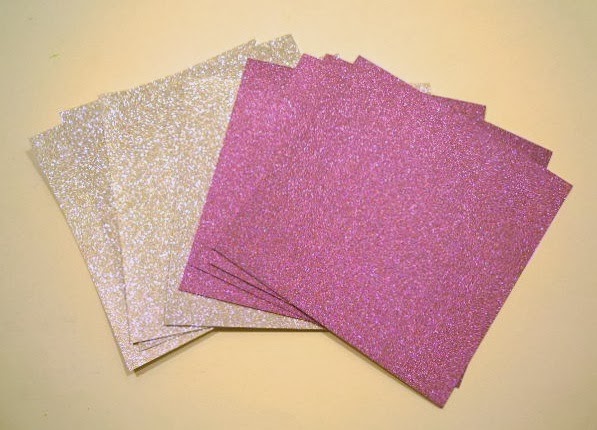
I decided not to buy the kits, because they were oddly expensive and nothing special. Instead, I bought two packages of sparkly 6 x 6-inch (15.25 x 15.25 cm) paper in white and mauve.


Because bunting usually has uniform pennant-shaped pieces, I made myself a template out of sturdy cardboard. I also punched guide holes in the spots I would need for stringing the pennants.


I cut out eight pennants, then tried to figure out how to "elephantize" them. My original idea was to punch elephant-shaped holes in them with a Martha Stewart punch a close friend had given me. Then I thought it might be nicer if I cut out elephants from the paper scraps and glued them to the pennants.


I decided to draw my own elephant shape, and created this template.


I cut out four elephants in each colour, making sure that half of them faced left, and half of them faced right.


Thinking that an elephant alone might look a bit plain, I cut out four stars in each colour with a star punch that I happened to have.


And, since I already had sparkly holes from making the pennants, I thought I might as well use those, too.


Using a heavy-bodied white glue, I glued everything down in a pattern I found pleasing, then placed all eight pennants under a heavy box to make sure everything had properly adhered.


I was originally going to use a white cotton ribbon to string everything together, but the piece I had was too short. Luckily, I had some purple satin ribbon that was perfect, so that's what I used.


Although this was a bit fiddly, it was relatively easy, once I decided on a design. And at three dollars for paper and maybe a dollar's worth of ribbon, it's an inexpensive way to create a rather nice party decoration.


Elephant Lore of the Day
Although the elephants don't get bunting for this particular party, they do get treats each March 13 for Thailand's  National Elephant Day. One of the largest celebrations occurs at the Maesa camp in Chiang Mai province, where more than 100 elephants gather for an elaborate feast of fresh fruit. The yearly all-you-can-eat buffet features tables piled high with bananas, watermelons, sugarcane, pineapples and more.


National Elephant Day banquet at Maesa Camp, Chiang Mai, Thailand, 2012.
Photo: © AP
Source: http://www.dailymail.co.uk/news/article-2114437/Herd-elephants-pack-
trunks-fruit-leaves-National-Elephant-Day-celebration-Thailand.html


The elephants live with their mahouts at Maesa, which is home to one of the largest herds of elephants in northern Thailand. Maesa is actively involved in both conserving and breeding the animals, in an attempt to halt their precipitous decline. A sobering statistic: at the beginning of the twentieth century, there were around 100,000 elephants in Thailand; today there are a mere 3,000 or so left in the entire country, only half of which are wild.

Although Maesa's elephants go through about six tonnes of grass and sugarcane a day, the yearly elephant feast is a way of acknowledging the elephant's importance to Thailand's history and national consciousness.


Elephants chowing down at Maesa camp on National Elephant Day, 2012.
Photo: © EPA
Source: http://www.dailymail.co.uk/news/article-2114437/Herd-elephants-pack-
trunks-fruit-leaves-National-Elephant-Day-celebration-Thailand.html

To Support Elephant Welfare